Introduction — the significance of the moment
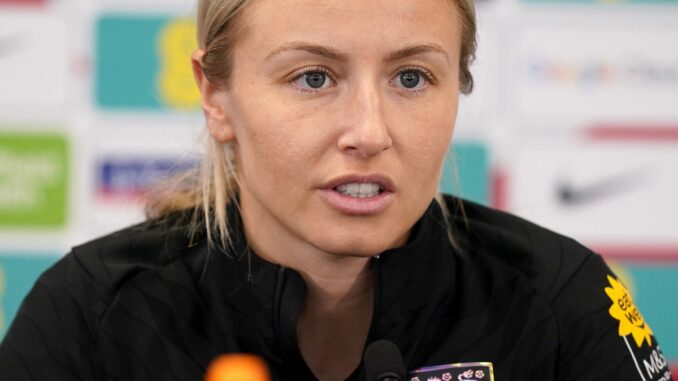
When Leah Williamson stood at the podium of the United Nations General Assembly in September 2023, she marked more than a personal milestone — she became the first female player from England women’s national football team (and first from Arsenal W.F.C.) ever to address the world’s foremost global institution.
Her speech wasn’t a simple token of celebrity-status. It was a powerful, heartfelt appeal for equity — for challenging persistent barriers, dissolving outdated stereotypes, and giving young girls everywhere real opportunities to pursue sport (and, by extension, their dreams). Williamson’s words and presence underscored the broader potential of sport — not just as entertainment, but as a tool for social change.
In her own words:
“We keep opening all these doors, but young girls need to have the confidence and belief to walk through them themselves.”
This essay explores the context, the message, the impact — and more importantly, why her speech still matters today.
The Context: Why did Williamson speak at the UN?
A historic first
- Williamson’s 2023 address made history. She became the first English women’s footballer — and the first Arsenal woman — to speak at the UN.
- She attended as part of the UN’s Sustainable Development Goals Summit (SDGs Summit) — a forum bringing together world leaders, NGOs, activists, foundations and influencers, to chart paths toward equality, sustainability, peace and development.
Why football — and why now?
- Williamson’s journey and platform were rooted in her sport: football. But that sport, globally and historically, has been rife with gender-based barriers — from social norms to institutional neglect. Her own path was shaped by those barriers. She has publicly reflected that as a girl she had to fight “social norms and … what some people maybe believed to be right or wrong.”
- Through her club’s foundation work — specifically the The Arsenal Foundation in partnership with Save the Children — Williamson had a real-world example to point to: a program using football to support children — particularly girls — in hardship contexts (notably refugee camps).
- Her presence at the UN was a testament to how sport can transcend athletic achievement — to become a mechanism for social inclusion, empowerment, mental health support, and a means of building hope. As she herself said, “Sport has the power to change lives.”
Thus, Williamson’s speech came not just from her status as a celebrated athlete, but from lived experience, commitment to social justice, and a belief in sport’s ability to transform lives beyond the pitch.
Key Themes in Her Message
1. Breaking down gender stereotypes & leveling the playing field
One of Williamson’s central points was that even though progress has been made, sport remains unequal globally. She urged the audience to challenge those inequities:
- “It’s still not a level playing field for so many girls around the world.”
- Her call was not for special treatment — but equal opportunity: the chance to see how far they can go, if allowed to play and grow.
- That also means dismantling social norms and entrenched beliefs about who should — or should not — play sport.
2. Sport as a powerful tool for empowerment, inclusion, and resilience
Williamson emphasized that sport — football in her case — can do more than entertain. It can:
- Provide confidence, community, and purpose to girls from marginalized or traumatized backgrounds (e.g., refugee camps). When she visited the refugee camp Za’atari refugee camp in Jordan, she saw how participation in the program helped girls “cope better with the challenges they face.”
- Challenge and transform social attitudes, even among men and boys — something she highlighted as essential, since changing stereotypes requires everyone’s involvement.
- Offer hope and community where there might be despair — giving children a sense of belonging, stability, and something positive to focus on. Williamson described the camp’s football pitch as more than just grass — as a place that symbolized freedom, escape, and possibility.
3. The responsibility to pave the way — but also the need for personal agency
The nugget of her famous statement reflects this dual emphasis:
“We keep opening all these doors, but young girls need to have the confidence and belief to walk through them themselves.”
- On one side: the duty of “those who’ve made progress” — institutions, sports clubs, foundations, supporters — to keep creating access, opportunity, visibility.
- On the other side: the need for agency, for courage, for self-belief among young girls: no matter the structures, the final step must come from them.
- Williamson implicitly argues for empowerment — not charity. Investing in the infrastructure is vital; but so is nurturing a mindset of possibility among the girls themselves.
4. Global solidarity and intersectional focus
Though she is English, her UN address was global in scope. By referencing her experiences at Za’atari (in Jordan), she illustrated how sport — when backed by solidarity and the right resources — can transcend national or cultural boundaries.
She also emphasized the need to include boys and men in the conversation — to reshape outdated notions of masculinity and ensure lasting cultural shifts.
The Impact — Why It Matters
Giving visibility to women’s football — and women’s voice
Williamson’s speech at the UN offered global visibility to women’s football — not as a niche interest, but as a platform for social justice, empowerment, and human rights. Her voice — at once a professional athlete and an advocate — disrupted the notion that sports figures only belong on the pitch.
This matters especially for young girls worldwide who may lack role models, access to organized sport, or confidence to believe in their own potential. Williamson’s path — from grassroots football to global advocacy — highlights a blueprint: success + service + advocacy.
Inspiring structural change, and challenging inequalities
By highlighting institutional barriers — lack of opportunity, gender stereotypes, social norms, limited access — Williamson added momentum to conversations about gender equality in sport. Her UN appearance helped reframe football as a vector for social good, equity, and inclusion.
Through her work with The Arsenal Foundation and Save the Children — especially via the “Coaching for Life” programme — she provided a concrete, replicable model of how sport-based initiatives can support vulnerable communities (e.g. refugee camps), foster mental and emotional wellbeing, and give hope to young girls otherwise marginalized.
Empowering girls to believe — and to act
Perhaps the most powerful legacy of her message is psychological: giving permission and encouragement for girls to believe in themselves, to walk through open doors, to dare to dream and act.
That message — equal opportunity, combined with self-belief — transcends sport. It applies to education, livelihoods, activism, community leadership. By framing sport as one piece of the journey toward equality, Williamson’s address contributes to a broader cultural shift: from seeing girls as passive beneficiaries to agents of change.
Challenges & The Road Ahead — What Still Needs to Be Done
Williamson’s speech is aspirational — but reality remains stubborn. Some of the challenges her address highlights include:
- Persistent social and cultural barriers. In many parts of the world, girls and young women still face entrenched stereotypes, prejudice, conservative norms, or even outright bans on sport participation. Changing mindsets — especially across cultures — is slow and difficult.
- Inequitable resource allocation. Even when doors are conceptually open (clubs, foundations, NGOs), sustained access requires investment — in facilities, coaching, safe spaces — not just temporary, one-off programs. Ensuring longevity is crucial.
- Need for structural support. Advocacy must be backed by policy: school programs, funding, equal media visibility, institutional commitments. Without structural support, access remains fragile.
- Sustaining momentum. A powerful speech can catalyze change — but real transformation requires ongoing dedication, follow-through, monitoring, and patience. The struggle for gender equality in sport is generational.
In this respect, Williamson’s address is an essential step, but not the end: it plants a seed. The real work is in nurturing it.
Why Her Message Resonates — Beyond Football
Leah Williamson’s plea resonates far beyond the boundaries of sport. Because:
- Sport — especially football — is a universal language. It transcends borders, languages, cultures. When used intentionally, it unites.
- The themes she raised — equality, opportunity, confidence, inclusion — apply to many realms: education, employment, community life, social justice.
- Her own journey humanises the struggle: a girl who loved football, who chased that passion despite norms, who rose to the top — and now uses her platform to open doors for others. That narrative is powerful, replicable, and motivational for girls and young women globally.
Her message might have been delivered from a UN podium — but its echoes reach grassroots pitches, schoolyards, refugee camps, small towns, big cities. Wherever there are girls who dream, the call is the same: you deserve the chance. Walk through.
Final Thoughts — The Power of a Door, and the Power of Belief
“We keep opening all these doors, but young girls need to have the confidence and belief to walk through them themselves.”
That line, simple yet profound, encapsulates the dual nature of progress: structural change + personal agency. Without both, any opening remains just a door — empty, silent, unused.
What makes Williamson’s moment important is that it turned an abstract ideal (equality, opportunity) into a concrete appeal — to institutions, yes, but also to every young girl who hears it. It said: “We — people with platforms — will build the path. But you — you must take the step.”
In a world that often doubts girls’ dreams, Williamson’s speech at the UN stands as a beacon — a reminder that doors can open, but belief is what makes you walk through.
Leave a Reply