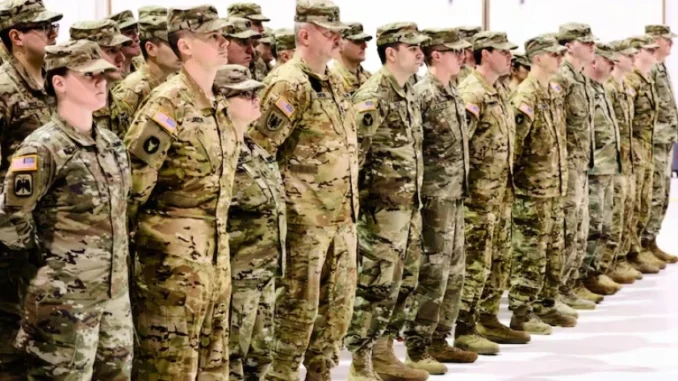
Of all the images that came to define the tumultuous summer of 2020—the swirling tear gas, the towering bonfires, the wall of federal officers in camouflage—few were as potent, or as constitutionally significant, as the one that emerged from a federal courthouse in Portland, Oregon. It was not a photograph of a protest, but a PDF of a legal ruling. In a decision that sent shockwaves through the worlds of law and governance, U.S. District Judge Michael J. McShane issued a permanent injunction, barring the Trump administration from deploying elements of the Oregon National Guard to quell unrest in Portland without the express consent of the state’s governor.
This was not merely a procedural setback for a president; it was a profound reassertion of a foundational American principle: the balance of power between the federal government and the states, and the limits of executive authority. The ruling was the culmination of a dramatic legal and political battle, a modern-day test of the Posse Comitatus Act and the centuries-old concept of posse comitatus itself. To understand its full weight is to journey into the heart of a national crisis, the long-standing laws meant to contain it, and a judicial rebuke that would echo far beyond the streets of one city.
The Crucible of Portland: A City Under Siege
To grasp the significance of Judge McShane’s ruling, one must first appreciate the context in which it was delivered. For over three months in the summer of 2020, Portland became the epicenter of a national reckoning on race and policing. Following the murder of George Floyd, nightly protests erupted, often focusing on the federal courthouse, the Hatfield Federal Courthouse, which became a fortified symbol of state power.
The situation escalated dramatically in July when the Trump administration, bypassing Oregon’s Democratic Governor, Kate Brown, deployed a patchwork of federal forces. Agents from Customs and Border Protection (CBP), the Department of Homeland Security (DHS), and the U.S. Marshals Service, clad in tactical gear without clear identification, began patrolling the streets. Their stated mission was to protect federal property, but their actions—snatching protesters off the street in unmarked vans, using tear gas and impact munitions aggressively—suggested a broader, more confrontational mandate.
For Governor Brown and Portland’s Mayor, Ted Wheeler, this federal intervention was not a solution but a provocation. They argued that the presence of these unidentified federal agents was inflaming the situation, transforming largely peaceful, if tense, protests into violent confrontations. The state and city leadership found themselves in a bizarre and untenable position: they were losing control of their own streets to federal actors they had not requested and did not want.
It was against this backdrop of escalating tension and a perceived federal overreach that the specter of the National Guard was raised. Leaks and reports began to circulate that the Trump administration was considering a drastic next step: federalizing the Oregon National Guard to bolster its enforcement operations. For Governor Brown, this was the red line. The Guard, under her command, had been deployed earlier in the summer to support state police, but the idea of it being commandeered by the White House to act against the wishes of the state was an existential threat to state sovereignty.
The Legal Battlefield: State of Oregon v. Donald J. Trump
In August 2020, the State of Oregon, represented by Attorney General Ellen Rosenblum, filed a lawsuit against President Trump, Acting Secretary of Homeland Security Chad Wolf, and other administration officials. The lawsuit was a multi-pronged assault, but its most critical component was a request for an injunction to block the potential deployment of the National Guard.
The state’s argument rested on two primary legal pillars:
1. The Posse Comitatus Act (PCA): Enacted in 1878 in the aftermath of Reconstruction, the PCA is a cornerstone of American civil-military relations. Its core purpose is to prohibit the use of the U.S. military, including the Army and Air Force, for domestic law enforcement. The law states that whoever “willfully uses any part of the Army or the Air Force as a posse comitatus or otherwise to execute the laws” is in violation, except as expressly authorized by the Constitution or Act of Congress. The state argued that using federalized National Guard troops—who, when in federal service, become part of the U.S. military—to perform policing functions like crowd control and arrests in Portland would be a clear violation of the PCA.
2. The Insurrection Act and the Tenth Amendment: The administration’s potential counter-argument would likely hinge on the Insurrection Act of 1807. This act is the primary exception to the Posse Comitatus Act, allowing the president to deploy the military domestically to suppress insurrection, rebellion, or to enforce federal law where state authorities are unable or unwilling to do so.
However, Oregon’s lawsuit contended that the conditions for invoking the Insurrection Act were not met. Governor Brown had repeatedly stated that the situation, while serious, did not constitute an insurrection and that state and local authorities were both willing and able to manage the protests. To invoke the Act against the express will of the state’s governor, Oregon argued, would be a gross abuse of presidential power and a violation of the Tenth Amendment, which reserves all powers not delegated to the federal government to the states.
The Trump administration, in its defense, portrayed Portland as a city in chaos, where local authorities had lost control and anarchists were running rampant. They framed their actions as a necessary defense of federal property and the enforcement of federal law, implicitly suggesting that the Insurrection Act could be a justified tool.
The Judge’s Gavel: McShane’s Landmark Ruling
Judge Michael J. McShane, an Obama appointee, did not rule immediately. He allowed a temporary restraining order to stand while he considered the weighty constitutional questions. His final ruling, delivered in the fall of 2020, was a resounding victory for the State of Oregon and a stark delineation of constitutional boundaries.
Permanently Blocking the Guard: The core of Judge McShane’s decision was the permanent injunction. He barred the Trump administration from “using members of the Oregon National Guard, or any state’s National Guard, to suppress protests in Portland, Oregon, unless and until the Governor of Oregon or the appropriate authority of another state has consented to such a deployment.”
This was not a narrow, technical ruling. It was a broad, preemptive strike against a specific and feared abuse of power. By making the injunction permanent, Judge McShane ensured that the threat could not be resurrected later, effectively taking the option of using the Guard off the table for the duration of the Portland crisis.
The Reasoning: A Defense of Federalism: Judge McShane’s opinion was a masterclass in constitutional law and federalist principles. He systematically dismantled the administration’s potential justifications.
· On the Posse Comitatus Act: He affirmed that the PCA creates a “strong default rule” against using the military for domestic policing. He found that the plaintiffs had a strong likelihood of success on the merits of their claim that deploying federalized Guard troops would violate this sacred principle.
· On the Insurrection Act: This was the crux of his reasoning. Judge McShane expressed deep skepticism that the conditions for invoking the Act existed. He gave significant deference to the assessment of Governor Brown, who had formally declared that no insurrection was occurring and that state forces were capable of maintaining order. The judge noted that the Act is intended to be a tool of last resort, to be used when a state is unable to suppress an insurrection, not when the federal government simply disagrees with a state’s tactics or finds them insufficiently aggressive.
· On the Tenth Amendment: Underpinning the entire ruling was a robust defense of state sovereignty. Judge McShane’s decision reinforced that the power to manage public safety and control the state’s own National Guard in domestic affairs is primarily a state function. The federal government’s attempt to usurp that power, absent a genuine and acknowledged insurrection, was an unconstitutional infringement on the state’s reserved powers.
The Ripple Effects: Precedent for a New Era of Unrest
The permanent injunction in the Portland case did not single-handedly end the protests, but it neutered the most extreme option available to the federal government. Its impact, however, extended far beyond the Pacific Northwest.
1. A Reinforced Constitutional Firewall: The ruling served as a powerful judicial reaffirmation of the limits of presidential power. It established a clear precedent that a president cannot unilaterally militarize a state’s response to civil unrest against the will of its governor. This firewall is crucial for maintaining the balance of power, preventing the White House from using domestic crises as a pretext for deploying military force within sovereign states.
2. A Blueprint for Other States: The success of Oregon’s lawsuit provided a legal roadmap for other states facing potential federal overreach. It demonstrated that the courts could be an effective check on an administration willing to push the boundaries of the Insurrection Act and the Posse Comitatus Act. Governors across the country now had a powerful legal weapon and a winning argument to cite should a future president attempt a similar maneuver.
3. Clarifying the “Shadow” of the Insurrection Act: The Insurrection Act is a notoriously vague statute, its language rooted in the 19th century. Judge McShane’s ruling provided much-needed modern interpretation, emphasizing that a governor’s assessment of the situation carries immense weight and that the Act is not a blank check for presidential intervention. It raised the legal and political bar for any future president seeking to invoke it.
4. The National Guard’s Dual Role: The case highlighted the unique, and often precarious, dual status of the National Guard. As a state militia, it answers to the governor and is a tool for disaster response and civil support. When federalized, it becomes part of the U.S. military. The ruling reinforced the principle that shifting the Guard into that federal role for domestic law enforcement is an extraordinary step, fraught with legal and democratic perils, not to be taken lightly.
An Enduring Legacy
The image of a federal judge permanently blocking a sitting president from deploying troops on American soil is a powerful one. It is a testament to the resilience of American institutions even in times of profound stress. The ruling was not about endorsing or condemning the protests in Portland; it was about upholding the rule of law and the constitutional structure designed to prevent autocracy.
In the years since, the specter of the Portland summer has not faded. Discussions about domestic terrorism, the appropriate use of federal force, and the nature of protest continue to dominate the national conversation. The precedent set by Judge McShane stands as a critical bulwark. It is a legal landmark that declares, in no uncertain terms, that the military shall not be used as a police force against the American people, and that the power to govern public safety within a state’s borders begins not in the Oval Office, but in the statehouse. In a nation perpetually grappling with the tension between order and liberty, the ruling ensured that when the next crisis comes, the guardrails of the Republic will hold.
Leave a Reply