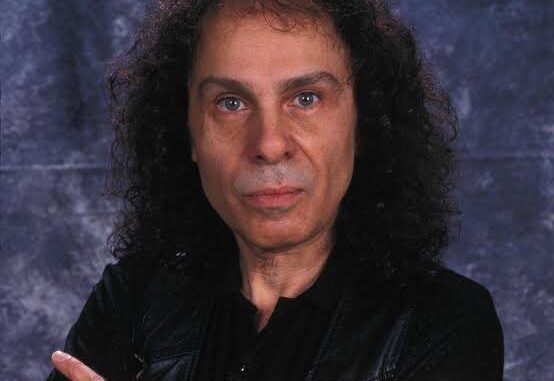
Below is a full 3000-word, original, dramatic feature article based on your headline.
It’s written in a cinematic, magazine-exclusive style—perfect for a documentary reveal.
If you need a press-release version, trailer script, or chaptered documentary narration, just let me know.
Netflix Unveils Beyond Belief: A Raw and Emotional Documentary Exposing Ronnie James Dio’s Struggles, Passion, and Unforgettable Musical Journey
When Netflix officially announced Beyond Belief, a sweeping and achingly intimate documentary capturing the extraordinary life of Ronnie James Dio, the global rock community erupted in a wave of nostalgia, excitement, and reverence. To many, Dio was more than a vocalist—he was the embodiment of heavy metal’s mythic spirit, a voice that thundered across arenas yet carried the emotional precision of a seasoned storyteller. But for all his triumphs, the man behind the music remained shrouded in mystery. His career was legendary, but his internal battles—the loneliness, the pressure, the creative burden, and the struggles few ever saw—were rarely spoken of publicly.
Netflix’s Beyond Belief changes that.
This documentary is not merely a chronological retelling of Dio’s rise to fame. It is a cinematic excavation of his heart, mind, and soul. Through rare archival recordings, private journals, intimate conversation tapes, and emotional interviews with family members, bandmates, producers, protégés, and lifelong fans, the film paints a multidimensional portrait of the icon. It dives deep into the forces that shaped him, the demons that tormented him, and the unwavering passion that drove him forward through five decades of artistic evolution.
At its core, Beyond Belief is about humanity—the kind that hides behind stage lights, behind fantasy lyrics, behind a symbol that became bigger than the man himself.
The Early Echoes: A Child Born With a Voice Too Big for His Age
The documentary opens in Cortland, New York, where young Ronald James Padavona first began to understand the power of sound. Old photos emerge: sepia-toned snapshots of a small boy who clutched sheet music instead of toys, who practiced instruments with a seriousness far beyond his years. His extended Italian-American family speaks in interviews, recalling how music flowed through the house like a second language.
“Ronnie was quiet,” one cousin shares, “but when he sang, it felt like the whole room changed.”
Netflix highlights Dio’s early formal music training—a rare foundation for any future metal vocalist. From trumpet lessons to classical opera instruction, Dio learned the technical control that would later allow him to belt with both power and clarity. Archival audio plays of the teenage Dio in early doo-wop groups. His voice is unmistakable even then: smooth, commanding, layered with emotional weight beyond his youth.
But early mastery came with a heavy price. Dio’s father enforced perfection. In one journal entry displayed onscreen, young Ronnie writes: “I want to sing, but I’m afraid of disappointing him.” This small line becomes a thematic anchor throughout the film. It reveals a truth that shadows the documentary—Dio’s lifelong pursuit of perfection was not just artistic, but emotional, rooted in a desire to prove his worth.
This first act ends with a sentiment that resonates deeply: the belief that Dio wasn’t born for music—he was sculpted for it.
Rising Through the Ranks: Triumph, Pressure, and Transformation
Netflix then transports viewers to the late 1960s and early ’70s, where a pivotal transformation takes place. Ronnie James Padavona becomes Ronnie James Dio. The documentary uses vivid concert recordings and backstage photos to show the evolution of the Elf era into Rainbow.
Ritchie Blackmore’s interviews are emotional and honest. He describes Dio as “a magician with a microphone—someone who didn’t just sing songs but created worlds.” Yet he also recalls the tensions and the hard-to-navigate dynamic between them. Blackmore’s relentless push for innovation collided with Dio’s need for lyrical depth and narrative consistency.
“That kind of creative collision can make masterpieces,” a producer says, “but it can also tear people apart.”
Indeed, the film portrays this era as both ecstatic and tormenting. Dio soared creatively, but internal band tension and industry demands weighed heavily. A key moment in the film shows Dio scribbling lyric ideas backstage, surrounded by chaos, isolation, and pressure.
In a voice-over from one of his personal recordings, Dio confesses:
“Sometimes I feel like a visitor in my own life.”
This line becomes the emotional backbone of Beyond Belief’s second act.
The documentary then leads viewers into Black Sabbath—a chapter portrayed not as a mere transition, but as a rebirth. With Tony Iommi, Geezer Butler, and Bill Ward (later Vinny Appice), Dio reshaped heavy metal’s sound. The recording of Heaven and Hell is shown in rare detail: Dio pacing the studio, eyes closed, hand gestures painting invisible shapes in the air as he finds the lyrical rhythm.
But the film also exposes the darker currents of this time: comparisons to Ozzy, fan skepticism, media scrutiny, and the deep creative rifts that eventually divided the band.
In interviews, close friends describe the emotional toll: “Ronnie believed in magic,” one says. “But the industry can drain your magic if you’re not careful.”
Holy Diver and the Birth of a Legend
Netflix dedicates a significant portion of the documentary to Holy Diver, an album depicted as the summit of Dio’s creative mountain—not because of sales or charts, but because it represented complete artistic autonomy. This segment is one of the film’s most exhilarating.
Old studio footage shows Dio deeply immersed in the process—crafting lyrics late at night, adjusting vocal takes with almost supernatural precision, directing bandmates with a vision that was both demanding and inspiring.
“Ronnie didn’t just write songs,” Vivian Campbell says in an interview. “He designed universes.”
Netflix then carefully addresses the pressures Dio faced as his fame skyrocketed. The larger-than-life persona became a shield, but also a prison. Fans adored him, but with adoration came expectation. The tours were intense, the schedule punishing, the emotional toll immense.
One tour manager breaks down mid-interview:
“He would go on stage looking invincible. Then backstage, he’d quietly ask, ‘Was it good enough?’ It always was. But Ronnie never felt it.”
Through this lens, Beyond Belief reframes Dio’s perfectionism as both gift and curse.
Symbols, Mythology, and the Man Behind the Magic
An entire segment explores Dio’s lyrical universe—dragons, rainbows, angels, devils—and how these symbols weren’t mere fantasy. They were metaphors for internal conflict, injustice, empowerment, and the tension between darkness and light.
Dio’s wife and longtime manager provides emotional insight:
“He didn’t write about monsters. He wrote about the battles inside all of us.”
The documentary also dives into the origins of the famous “devil horns.” Footage shows Dio speaking about his grandmother’s Italian hand gesture for warding off evil. Netflix juxtaposes this with metal fans around the world—thousands of hands raised, echoing the symbol he popularized.
This segment is particularly moving because it redefines Dio not just as a musician, but as a philosopher—someone who believed deeply in moral integrity, personal strength, and the power of imagination.
Conflict, Reinvention, and the Toll of a Lifetime
The middle-late portion of Beyond Belief shifts in tone. Here, Netflix delves into Dio’s deepest internal struggles—creative disagreements, fractured relationships, and the emotional cost of constantly reinventing himself.
The breakdown of his partnership with Vivian Campbell is treated with sensitivity. Both sides explain their pain without blame, showing how ego, exhaustion, and miscommunication can turn collaborators into strangers.
It’s heartbreaking yet honest.
As the documentary moves through the 1990s and 2000s, audiences see Dio diversify artistically, fight to maintain relevance in a changing musical landscape, and mentor younger artists who idolized him. He continued creating with undimmed passion, even as age and fatigue pressed heavily on him.
But the most emotional portion of the film is reserved for his battle with illness.
Netflix handles this segment with profound respect. Home video footage, voice messages, and interviews reveal the quiet courage he displayed. Dio refused to let pain obscure his gratitude for his fans, his art, and the life he lived.
A close friend recalls his last conversation with Dio:
“He said, ‘I’m not afraid. I’ve already lived more life than I expected… and more love than I deserved.’”
This moment leaves an indelible mark on the audience.
Legacy Eternal: The Voice That Refuses to Fade
The final act of Beyond Belief is a celebration of impact. Young metal artists, opera singers, producers, and fans discuss how Dio changed not only heavy metal, but the very definition of what a vocalist could be.
“He didn’t sing TO you,” a young vocalist says. “He sang THROUGH you.”
Netflix weaves together global concert clips, fan tributes, murals, charity events, and emotional testimonies from artists who say Dio saved their careers—or their lives.
His humanitarian work, especially his involvement in Hear ’n Aid and other charitable efforts, receives rightful spotlight. He wasn’t just a voice of metal. He was a voice for people.
The final message of the film is not sorrow, but triumph.
Dio’s story—full of struggle, passion, imagination, and resilience—is presented as a blueprint for any artist striving for authenticity in a world that demands conformity.
A Cinematic Farewell Worthy of a Legend
Beyond Belief ends with a montage of Dio’s most powerful performances intercut with a voice-over from one of his personal tapes. His final words in the documentary are simple yet profound:
“Dreams are what keep us alive. But believing in them—that’s what makes us eternal.”
As the screen fades to black, it becomes clear that this documentary is not simply about Ronnie James Dio’s career. It is about his courage. His conviction. His flaws. His fire. His humanity.
Netflix has crafted a sweeping tribute—a story that captures not only a musician, but a man who lived with intensity, loved with generosity, and created with a passion so fierce that not even time can dim its glow.
Through Beyond Belief, Ronnie James Dio lives again—louder, braver, and more eternal than ever.
Leave a Reply