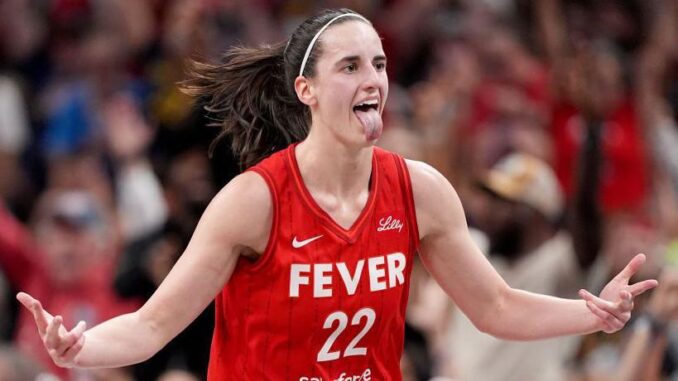
“Caitlin Clark Goes Off on Referees as Iowa Star Is Hit With Technical Following Her Fiery Reaction to a Blocked Shot”
I. The Night That Erupted
The Carver-Hawkeye Arena was buzzing long before tipoff. The kind of electricity that only a Caitlin Clark home game could generate had taken full ownership of the atmosphere. Fans in black and gold packed the arena shoulder-to-shoulder, tightly compressed like an over-inflated balloon waiting to burst. They arrived early, they arrived loud, and they arrived ready to witness whatever new chapter Caitlin Clark—college basketball’s most electrifying scorer, passer, and personality—would write next.
What they didn’t know, however, was that this particular night would deliver a chapter unlike any other. A chapter filled with emotion, confrontation, tension, and the type of raw fire that reveals exactly what pressure looks like when it collides with a superstar’s expectations.
When the final buzzer sounded, Iowa had escaped with a hard-fought win. But the scoreboard wasn’t the storyline. Instead, the sports world would be consumed by the moment mid-third quarter when Caitlin Clark—after a blocked shot she believed should have been a foul—unleashed one of the most animated reactions of her career. That eruption led to a rare technical foul and a fiery exchange with game officials that would echo across social media, sports talk shows, and post-game interviews.
For a player who normally channels her competitiveness into laser-focused intensity, the explosion was unusual—but also revealing.
This is the story of how the game unfolded, what triggered the moment, and why the reaction resonated so deeply throughout the world of women’s basketball.
II. The Build-Up: A Rivalry Reignited
Iowa was hosting a ranked conference rival—a program that had not only pushed the Hawkeyes in previous seasons but had also built a reputation for physical defense, rugged interior play, and a commitment to making Clark uncomfortable from the opening tip.
For years, coaches around the country had studied film, dissecting every angle of how to defend the prolific Iowa guard. Some opted for traps at half court. Others threw long, athletic defenders at her in waves. This team, however, relied on body-to-body pressure, hard screens, and the philosophy that Clark should feel every second of the game.
By the time the third quarter arrived, Clark had already taken several bumps, several contested drives, and several no-calls that left both her and her bench visibly frustrated. The referees were calling the game “loose,” allowing contact on both ends. It was a style of officiating that some teams thrive in—and that frustrates players who rely on rhythm, finesse, and sharp timing.
Clark, usually a master at compartmentalizing frustration, had been simmering since the second quarter. A missed over-the-back call early in the first half, a hand-check that was ignored as she drove to the rim, and an offensive foul she vehemently disagreed with had slowly built an emotional foundation for what was to come.
And then it happened.
III. The Block, the Outburst, the Whistle
Midway through the third quarter, Iowa was clinging to a four-point lead. Clark came off a high screen, crossed over to her left, and accelerated downhill toward the basket. She froze her primary defender, slipped through a gap, and elevated for a right-handed layup.
In one swift motion, the opposing center—six-foot-four, long-armed, springy—met Clark at the peak. Smack. A clean, powerful block, the type that sends the ball flying off the backboard and the crowd into a collective groan.
Or at least, that’s how the referees saw it.
Clark saw something very different.
To her, the contact was obvious: a forearm across the wrist, a hip check at the takeoff point, and a body collision that would have been a guaranteed foul on most nights.
But on this night—one that had already tilled the soil for frustration—the whistle stayed silent.
Clark landed on the ground, skidding slightly, then spun to face the official trailing the play.
Her arms shot upward in disbelief.
Her voice rose above the roar of Carver-Hawkeye.
And the words—whatever they were—carried enough heat to send the referee’s hand skyward in an instant.
Technical foul.
The arena erupted—not in joy, but in shock.
Clark stood frozen, her hands on her hips, eyes wide in a mix of disbelief and determination. The frustration that had brewed for more than 30 minutes had finally burst through, raw and unfiltered.
Her teammates rushed to her side. Head coach Lisa Bluder stepped toward the officials, palms outward, trying to diffuse the situation before it spiraled.
Clark inhaled deeply, exhaled slowly, and jogged toward the Iowa bench, shaking her head the entire way.
It was the most visible display of emotion she had shown all season—and one of the rare moments where intensity overcame composure.
IV. The Arena Reaction: Shockwaves Through Hawkeye Country
Even in the loud, high-stakes world of Iowa women’s basketball, a technical foul on Caitlin Clark was unusual.
She was fiery, yes. Passionate, absolutely. Vocal, always. But she was also calculated. She understood how referees responded to certain reactions, and she had mastered the ability to push the emotional boundaries of the game without crossing them.
So when the technical was called, the arena fell into a stunned hush—followed quickly by a rising tide of boos directed at the officiating crew.
Fans waved their arms in disbelief. Others shouted at the court. A few simply stood with hands on their heads, unable to comprehend what they were seeing.
But the loudest reaction came from the student section, a wall of noise that seemed to radiate frustration equal to Clark’s own.
This wasn’t just about one call. It was about the accumulation of whistles—or lack thereof—throughout the night. It was about protecting a superstar the fans believed was being targeted. It was about the energy of the game shifting on something that felt, to them, unjustified.
And more than anything, it was about witnessing their hero display a vulnerability, a frustration, and a rawness that reminded everyone she wasn’t just a star—she was human.
V. The Aftermath on the Court: Turning Anger Into Ammunition
What happened next would ultimately define the night just as much as the technical.
The opposing team sank one of the two free throws, cutting Iowa’s lead to three.
The Hawkeyes huddled near midcourt, and Clark—still visibly emotional—stood at the center of the circle. But rather than retreat into silence, she looked her teammates in the eyes, clapped her hands, and said something that instantly shifted the energy around her.
And though the cameras couldn’t pick up her voice clearly, those close enough to hear said her words were simple:
“I’ve got us. Let’s finish this.”
When the game resumed, Clark played with a combination of precision and ferocity that bordered on artistic. Her focus became sharper, her passes crisper, her range deeper, and her scoring bursts more explosive.
A step-back three from 27 feet.
A full-speed transition assist that threaded two defenders.
A pull-up jumper over a double team.
A deep logo-range bomb that ignited the arena.
The technical, rather than unraveling her, ignited her.
By the fourth quarter, she had taken total control of the game, and Iowa surged ahead by double digits, pulling away for a hard-earned victory that would be remembered far more for the emotional fireworks than the final score.
VI. Post-Game Press Conference: Clark Addresses the Outburst
The post-game media room was packed—reporters from across the Midwest, national outlets, radio shows, and digital platforms all waiting to hear Caitlin Clark break down the moment that had already exploded across social media.
Clark entered the room composed but reflective. She was no longer the fiery competitor who had screamed toward the official; she was the thoughtful, polished leader who understood that moments like these shape narratives far beyond the court.
Her response was measured.
On the block:
“I thought I got hit. I think a lot of players would react the same way. It’s a physical game, and emotions run high. But I should’ve handled it better.”
On the technical:
“Look, officials have a tough job. I can’t let my frustrations spill over. I’m competitive—that’s who I am—but I need to keep my cool. That part’s on me.”
On the game’s physicality:
“We knew it would be physical. That’s how they play. I’m used to it. Sometimes you get the whistle, sometimes you don’t.”
On her response afterward:
“I just wanted to lock in for my teammates. Once the tech happened, the only thing I could control was how I finished the game.”
Her coach echoed similar sentiments, praising Clark’s leadership and ability to refocus, while also acknowledging that the emotional landscape of elite college basketball is intense, unpredictable, and deeply human.
VII. Social Media Reaction: A Firestorm of Opinions
Within minutes of the technical foul, Twitter, Instagram, TikTok, and sports forums lit up with commentary, debate, and highlight clips.
The block.
The outburst.
The whistle.
Clark’s stunned reaction.
All of it was replayed, slowed down, zoomed in, dissected, and argued over with the intensity usually reserved for professional playoff games.
Fans debated:
- Was the block clean or was there contact?
- Did Clark have a right to react as strongly as she did?
- Did the officials handle the moment correctly?
- Was the game called too loosely overall?
Sports analysts chimed in:
Some argued that Clark’s superstar status made her a target for increased physicality. Others said she needed to show more composure. Others still defended her passion, noting that male players often display similar reactions without the same scrutiny.
Former players added perspective:
Some sympathized with Clark, sharing stories of their own frustrations with officiating. Others emphasized the importance of leadership and maintaining composure in tense moments.
And through it all, the clip went viral, garnering millions of views and generating conversations about everything from officiating consistency to gender dynamics in sports.
VIII. The Psychology Behind the Moment
To understand why this moment landed so powerfully, one has to understand the unique psychological world Caitlin Clark occupies.
She is not just a player—she is a phenomenon. A walking spotlight who shifts the landscape of women’s basketball with every performance. The expectations on her shoulders are enormous, often unspoken, but ever-present.
She is expected to:
- Score 30 points
- Make dazzling passes
- Lead her team
- Elevate teammates
- Handle physical pressure
- Stay composed
- Entertain fans
- Inspire the next generation
- Absorb criticism
- Represent the sport at a national level
And she is expected to do all of this with grace, attentiveness, and poise.
That load would wear on anyone. And in moments where fatigue meets frustration—and officiating plays a role—emotions can crack through even the strongest composure.
Clark’s eruption wasn’t just about one call. It was about the emotional cost of carrying so much while being the focal point of every defense, every camera, and every storyline.
In that sense, the reaction was not a flaw—nor was it a failure.
It was human.
IX. The Legacy of the Moment
By the next morning, headlines across the country had seized on the story. But interestingly, the tone was not overwhelmingly critical. Rather, it was curious, empathetic, and analytical.
Many praised Clark’s ability to regain control and lead Iowa to victory.
Others focused on the need for consistent officiating in women’s basketball.
Some reflected on the double standard that often surrounds female athletes showing intensity or emotion.
But nearly all agreed on one point:
The moment represented the passion that makes Clark special.
Fans don’t connect to perfection—they connect to authenticity.
And on this night, authenticity had taken center stage.
X. Conclusion: Fire, Passion, and the Limits of Composure
Caitlin Clark’s technical foul will not define her career.
It will not overshadow her achievements.
It will not become a stain on her legacy.
But it will be remembered as one of the rare moments where the competitive fire that makes her great boiled over in a way that fans could see, feel, and relate to.
It revealed the emotional reality of elite athletics.
It demonstrated how much she cares—not just about scoring, or winning, but about competing at the highest level possible.
And it served as a reminder that behind every highlight reel, behind every record-breaking performance, behind every viral clip, stands a person navigating pressure, expectation, and emotion.
Caitlin Clark did not simply “go off on referees.”
She displayed the fire that fuels her greatness.
And sometimes, in the heat of battle, that fire burns a little too bright.
But that’s what makes her who she is—a fierce competitor whose passion elevates the sport, inspires millions, and turns every game she plays into must-watch television.
Leave a Reply