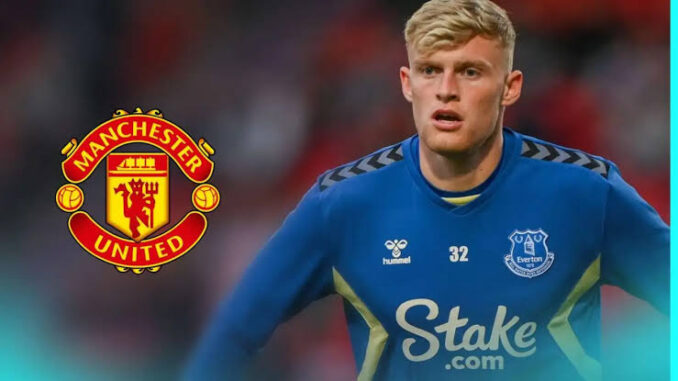
United take “decisive steps” to complete January signing, preparing £70m offer for 22-yo star — the inside track
Manchester United have reportedly moved beyond casual interest and “taken decisive steps” towards a January swoop for Nottingham Forest’s 22-year-old midfield dynamo Elliot Anderson — with a bid in the region of £70 million being prepared as part of a winter push to remodel the club’s engine room. Multiple outlets have carried the story in the past 48 hours, suggesting the Red Devils see Anderson as a long-term creative fulcrum and are ready to test Forest’s resolve in what could become one of January’s headline transfer sagas.
Below I break down what the reports say, why United may be so keen, how Anderson would fit tactically, what Nottingham Forest’s position is likely to be, who else could intervene, and what the realistic outcomes are as the window approaches.
What’s been reported (the essentials)
— Several outlets, citing a mix of transfer insiders and Spanish/UK sources, claim United have escalated their interest in Elliot Anderson and are preparing a substantial offer — broadly reported at about £70m — to attempt to prise the 22-year-old away from Forest in January.
— The same coverage suggests there is genuine internal alignment at United — that the recruitment team and manager view Anderson as a player who fits their preferred profile (young, creative, technically adept, with resale upside), prompting the “decisive steps” wording.
— Rival clubs are said to be circling: Manchester City and Chelsea have been linked historically with the midfielder, and other Premier League suitors could enter the picture if Forest signal willingness to sell. That competition is one reason United reportedly want to move with resolve.
Why £70m? The valuation debate
A £70m opening figure is significant but not unprecedented in today’s market for a young, English-qualified midfielder who has produced high-end metrics and international youth pedigree. The reported number is a compromise: it’s big enough to get Forest’s attention, but — according to some outlets — short of the six-figure valuation Forest might hope for if they perceive Anderson as untouchable and in demand.
A couple of contextual points:
— Market comparables: Midfielders of Anderson’s profile (creative, young, strong progressive passing numbers) have commanded fees in the £50m–£100m bracket in recent windows. Clubs often pay a premium for Premier League-proven English youth given sell-on/registration advantages.
— Forest’s leverage: Nottingham Forest’s negotiating power depends heavily on their league position and financial needs. If Forest are battling relegation or need to balance books, a mid-winter offer in the high tens of millions becomes harder to refuse. Conversely, a club in a stable financial position can hold out for more — or tie Anderson down and demand a summer move. Several reports note exactly this tension.
Who is Elliot Anderson? Quick profile
Elliot Anderson exploded into public view after becoming a central figure for Nottingham Forest. The Newcastle-born midfielder is 22, versatile across advanced midfield roles, and developed a reputation for creativity, intelligent progressive passing, and the ability to string together high-volume forward passes into dangerous areas. He featured for England’s youth sides and earned attention domestically for his consistent output in the Premier League. Recent coverage even suggested he was on the fringes of senior England recognition after standout performances.
Key attributes often mentioned in scouting reports:
Excellent range of passing and progressive passing volume.
Comfortable carrying the ball through midfield, adding dynamism to transitions.
Vision for late-arrival runs and through-balls into the box.
Good technical base and composure for a young player in a high-tempo league.
Tactical fit at United
Manchester United’s midfield profile under the current coaching setup has oscillated between physicality, structure and a pressing requirement for creative spark. Anderson offers a creative conduit: a player who can receive in tight pockets, progress possession, and link the midfield to the front line with incisive passes.
Possible roles at United:
No.8 / advanced central midfielder: Anderson could act as the connector between defensive midfielders and the attacking line, providing progressive passes and late runs.
Inverted wide-number / roaming 10: In systems that allow midfield rotation, his ability to drift into pockets of space could complement a more fixed playmaker or attacking winger.
Rotation option / youngster to be developed: United may see Anderson as both a starter-for-the-future and an upgrade in squad depth immediately.
Coaches will consider how he pairs with established names (ball-winning midfielders, a deeper pivot) and whether his defensive metrics are sufficient for Premier League rigours. But the recurring theme in reporting is United see him as a creative upgrade and a high-ceiling investment.
Nottingham Forest’s likely stance
Forest’s approach will be shaped by several practical realities:
1. Sporting competition: If Forest are mid-table or in a comfortable position, they can demand a larger fee or try to keep Anderson through the season. Contracts, release clauses (if any), and the club’s broader recruitment plan all matter.
2. Financial calculus: Winter windows present clubs with the chance to accept offers that stabilise budgets. A five-to-eight-figure windfall for a club outside the traditional top six can be transformative. Reports suggest Forest have already been fielding interest and will weigh immediate financial benefit against long-term squad strength.
3. Player desire and agent dynamics: If Anderson expresses a desire to move to a club of United’s stature and the wage package/playing project appeals to him, Forest’s negotiating power drops. Agents can accelerate talks — and United preparing an early bid might be designed to cultivate that momentum.
Who else might compete?
Journalists and transfer trackers have repeatedly linked City and Chelsea with interest at various points. For City, the profile fits a rotation/long-term investment; for Chelsea, a creative midfield boost fits their perpetual search for young talent. Throw in potential continental suitors and the result is a seller’s market — or at least a crowded one. United’s strategy seems to be to move decisively in January to pre-empt a bidding war.
Negotiation levers and possible deal structures
If United truly table a £70m offer, the deal could take a few shapes:
— Straight cash: A large up-front fee is simplest but expensive; clubs often prefer structured payments. — Add-ons & sell-on: A base fee of ~£50–70m with performance-related add-ons and a sell-on clause would bridge valuation gaps. — Player exchange / loan back: Less likely in January but conceivable if Forest want to retain the player for the rest of the season — United could propose a loan-back until summer. — Deferred payments: Installments across seasons to ease United’s Financial Fair Play (FFP) profiling.
Reports haven’t yet specified structure, only headline numbers, so the artifice of the deal remains speculative.
Risks for Manchester United
Every high-value January move carries risk:
— Fit and adaptation: Mid-season transfers give players less time to adapt; Anderson would need to hit the ground running. — Wage structure & dressing room: New signings can twist existing dynamics; United must manage squad balance carefully. — Financial scrutiny: Paying big sums in January invites questions about surgical squad building versus knee-jerk spending. — Opportunity cost: Committing £70m reduces flexibility for other needs (defensive reinforcements, backup striker, etc.).
United’s apparent willingness to act decisively suggests they believe the upside outweighs these risks — but that will be tested if a deal reaches the negotiation table.
What Nottingham Forest would need to secure
From Forest’s perspective, the optimal outcome would be either:
A substantially higher fee (ideally with add-ons) that reflects Anderson’s Premier League contribution and potential; or
A deal that keeps Anderson in place until the summer (loan-back) so their season is not compromised.
If Forest are in a precarious league position by January, their appetite to sell increases — and United’s £70m becomes more attractive. Conversely, if Forest are stable and ambitious, they may hold out until summer or demand more.
Predicting the likely outcome
There are three likely scenarios:
1. Deal agreed in January (probable if Forest’s position softens): United’s decisive approach pays off; Anderson moves and the transfer is structured to suit both clubs.
2. United table offer rebuffed — summer battle (plausible): Forest keep Anderson through the season and demand a higher figure in summer when negotiation dynamics shift.
3. Other suitors drive price up (possible wild card): If City or Chelsea enter a drawn out auction, Forest could push the fee well beyond £70m.
Based on current reporting, United have signalled intent and prepared a substantial offer — but the outcome depends on Forest’s short-term needs and whether rivals make competing approaches.
What this would mean for United’s squad
If Manchester United secure Anderson, the short-term expectation is that he would be eased in but quickly integrated — a creative boost and a building block of the squad’s medium-term plan. Over the long term, acquiring a young English midfielder with upside fits a strategic approach of buying players who appreciate in value and can be tailored into the team’s tactical identity.
If they miss out, United would likely continue searching the market for a similar profile, paying attention to other promising youngsters and possibly revisiting the midfield overhaul in the summer window.
Final thoughts
Transfer windows are as much about timing and psychology as they are about money. Manchester United preparing a headline £70m offer and taking “decisive steps” signals seriousness — and it puts pressure on both Nottingham Forest and competing suitors. Whether the move happens in January or becomes a protracted tug-of-war into the summer, Anderson’s name is one to watch: he’s at the intersection of on-field promise and market demand, and that combination tends to create high-stakes January drama.
If you want, I can:
Produce a concise timeline of Anderson’s 2024–25 and 2025 form/stats to show why United value him (with sources), or
Draft a mock negotiation letter United might send to Forest outlining a £70m proposal and potential add-on structure.
Sources: recent coverage and transfer reporting on Manchester United’s interest in Elliot Anderson, including The Peoples Person, Stretty News, The Daily Briefing and performance/England call-up coverage.
Leave a Reply